Everything Businesses Need to Know About CRM Software (2026 Guide)
Definition & Quick Summary
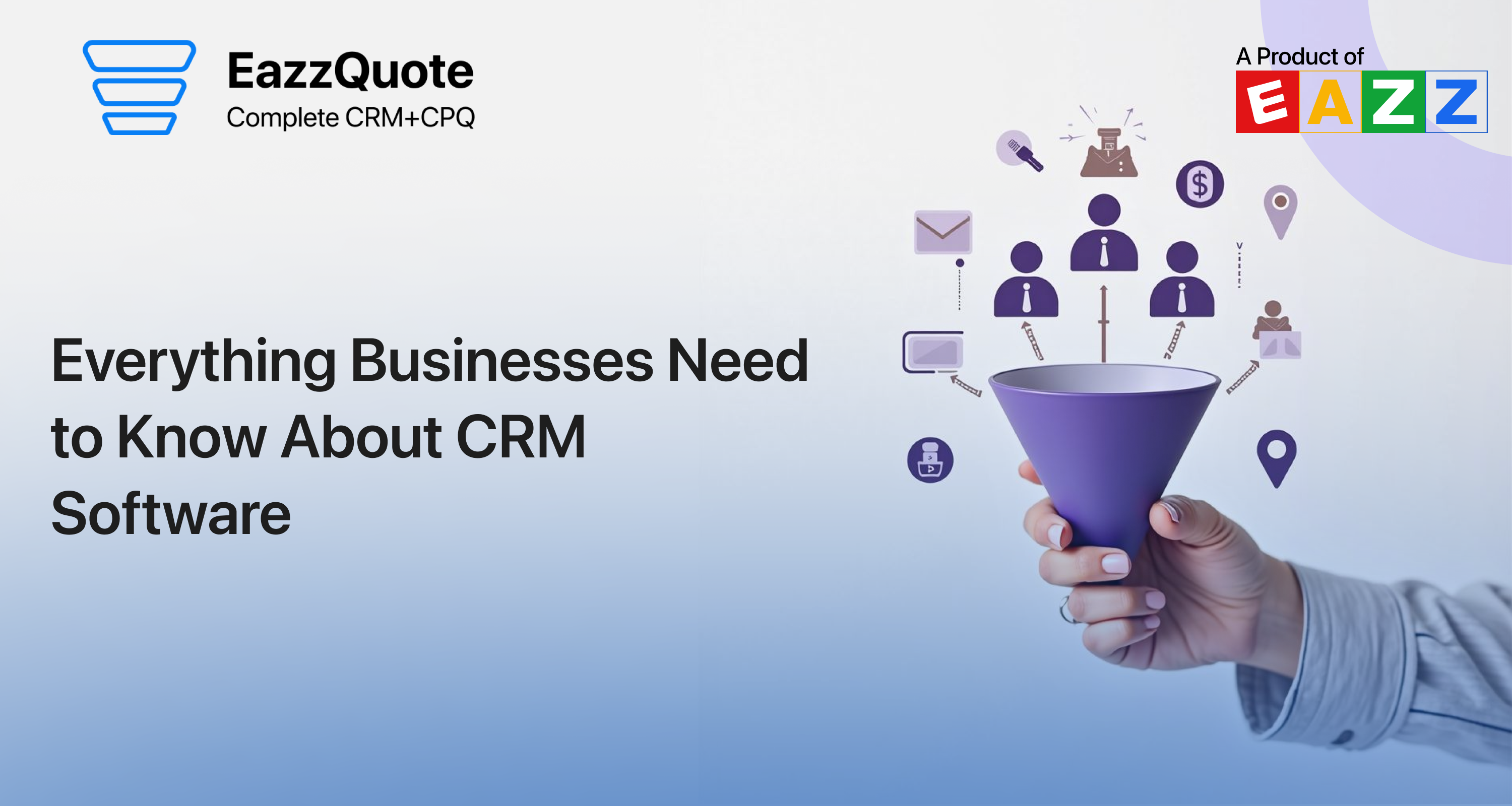
CRM (Customer Relationship Management) software is a tool that helps businesses manage customer information, track sales pipelines, automate tasks, and enhance the customer experience. It centralizes customer interactions, increases conversion rates, and enables businesses to make data-driven decisions.
This blog explains everything businesses need to know about CRM software. It covers topics like what CRM software is, what it is used for, how to choose the best CRM, and how to use it effectively.
You will also get to know its key benefits, types of CRM systems, common business challenges it solves, and future trends in CRM technology.
Table of Contents
- What Is CRM Software?
- What Is CRM Software Used For?
- What Is the Best CRM Software?
- How to Use CRM Software Effectively
- Key Benefits of CRM Software
- Types of CRM Software
- Cloud vs On-Premise CRM
- Key Statistics
- Challenges Businesses Face and Their Solutions
- The Future of CRM Software
- FAQs
What Is CRM Software?
CRM software is a tech platform that helps businesses manage customer relationships by storing contact data, tracking interactions, and automating processes.
In simple terms:
CRM software organizes customer information and helps businesses convert potential leads into recurring customers.
Core Functions:
- Contact management
- Lead tracking
- Sales pipeline monitoring
- Email integration
- Task automation
- Reporting and analytics
What Is CRM Software Used For?
CRM software is used to enhance sales performance, increase customer engagement, and streamline business operations.
Primary Uses:
- Lead Management: Track customers from initial query to closing of the deal.
- Sales Automation: Automate small and repetitive manual tasks to focus on other important work.
- Marketing Campaigns: Create groups for the same types of customers for personalized communication.
- Customer Support: Provide support or solve queries instantly to retain customers.
With the help of CRMs, businesses usually experience better customer retention and conversion rates.
What Is the Best CRM Software?
Business size, industry, and goals determine which CRM software is best. Some renowned CRM platforms are:
| CRM Software | Best For | Key Strength |
|---|---|---|
| Salesforce | Enterprises | Highly scalable and customizable |
| HubSpot | SMEs and marketing | All-in-one inbound tools |
| Zoho CRM | Budget-conscious teams | Affordable scalability |
| Microsoft Dynamics 365 | Microsoft users | Deep Office integration |
| EazzQuote | All sizes of businesses | AI-Integrated CRM and CPQ in one platform |
How to Choose:
- Define your needs and goals
- Check integrations
- Review automation features
- Evaluate scalability
- Finalize budget
How to Use CRM Software Effectively
- Step 1: Define Goals — Set realistic targets.
- Step 2: Import and Clean Data — Organize customer records.
- Step 3: Automate Workflows — Enable reminders and email sequences.
- Step 4: Train Teams — Ensure every employee is well-trained before onboarding.
- Step 5: Monitor Performance — Analyze KPIs and optimize processes.
CRM needs to be consistently used in order to determine success.
Key Benefits of CRM Software
CRM helps the sales team:
- Centralize database
- Improve collaboration
- Forecast revenue
- Personalize communication
- Make data-driven decisions
Types of CRM Software
There are three types of CRM:
- Operational CRM: Focuses on automation
- Analytical CRM: Focuses on data insights
- Collaborative CRM: Focuses on team communication
Modern CRMs, including ours, generally include all three for improved service.
Cloud vs On-Premise CRM
| Cloud CRM | On-Premise CRM |
|---|---|
| Remote access | Local server hosting |
| Lower upfront cost | Higher setup cost |
| Automatic updates | Manual maintenance |
Key Statistics
- According to Grand View Research, over 91% of companies with 10 or more employees use CRM systems.
- As per Nucleus Research, CRM can increase customer retention rates by 27%.
- Reports from Fortune Business Insights indicate that the global CRM market is expected to reach over $163 billion by 2030.
Challenges Businesses Face and Their Solutions
| Problem | Impact | CRM Solution |
|---|---|---|
| Lost leads | Less revenue | Automated tracking |
| Poor follow-ups | Low conversions | Scheduled reminders |
| Data silos | Team misalignment | Shared dashboard |
| No forecasting | Poor planning | Real-time analytics |
The Future of CRM Software
CRM systems are evolving with:
- AI-powered insights
- Predictive lead scoring
- Automated chatbots
- Personalized customer journeys
Businesses adopting intelligent CRM tools gain a competitive advantage through automation and smarter analytics.
Final Takeaway
Investing time and effort in selecting the right CRM service provider and implementing it will definitely produce significant results in the long run.
Ready to streamline your sales? Transform your business today with the help of EazzQuote’s AI-driven CRM & CPQ software.
FAQs
Yes, many CRM platforms offer scalable pricing and subscriptions for startups and SMEs.
Yes, automated follow-ups and structured lead tracking improve conversion rates.
Depends on the type of setup. Basic setup takes days, complex customization may take weeks.
Most cloud-based CRM systems are user friendly and require minimal training.
Contact
Email: info@eazzquote.com
Contact Us: +91-9124985345 | +971-561292026