Why Your Sales Team Is Losing Leads Without Realizing It
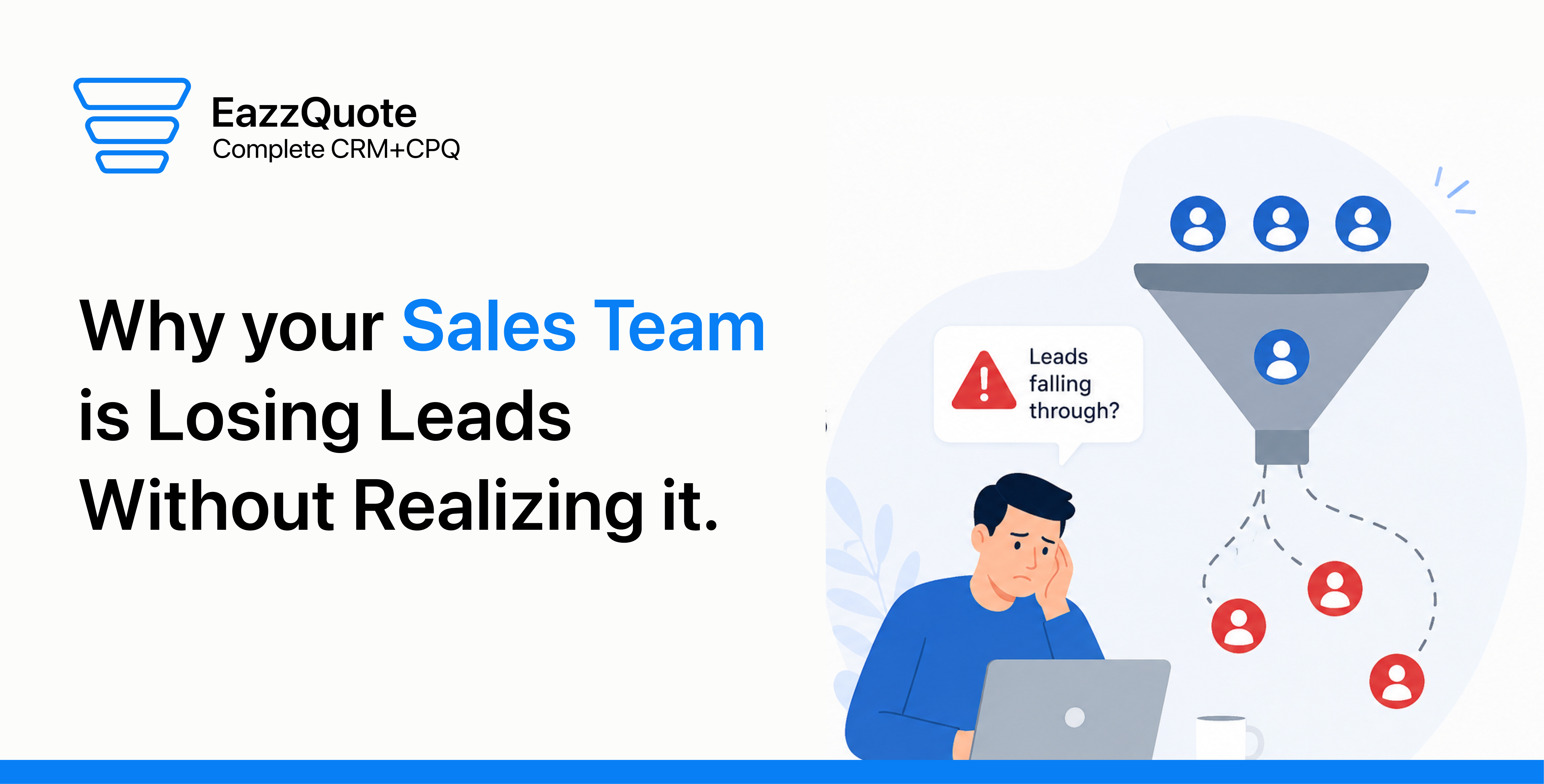
Every business wants more leads, but generating leads is only half the battle. The real challenge is turning those leads into paying customers. Many businesses invest heavily in marketing, advertising, social media, and lead-generation campaigns, yet still lose potential customers somewhere between the first enquiry and the final sale.
The problem is not always the sales team. In many cases, leads are lost because there is no organized process for managing them. A customer may enquire today, receive a call tomorrow, and then never hear from the business again. Another lead may be sitting in a spreadsheet while a salesperson is waiting for someone else to follow up.
This is where a CRM system can make a significant difference.
The Hidden Reasons Businesses Lose Leads
One of the most common reasons for lost leads is poor follow-up. A potential customer may be interested in a product or service but may not be ready to purchase immediately. Without a proper follow-up process, the sales representative may forget to contact them again.
Another major issue is scattered customer information. Sales teams often use spreadsheets, emails, messaging applications, notebooks, and different software tools to store customer details. When information is spread across multiple places, it becomes difficult to know what happened during the last interaction.
A modern CRM software brings this information together. Sales teams can access customer details, conversations, tasks, follow-up dates, lead status, and other important information from one centralized platform.
Missed Follow-Ups Can Mean Missed Revenue
Not every customer makes a purchasing decision after the first conversation. Some need additional information, some need approval from management, while others simply need more time.
This makes consistent follow-up an important part of the sales process.
With CRM automation, sales representatives can receive reminders for upcoming calls, emails, meetings, and follow-ups. Instead of depending entirely on memory, the system helps salespeople know which prospects require attention.
For managers, this also creates better visibility. They can identify leads that have not been contacted recently and take action before those opportunities disappear.
When Spreadsheets Become a Sales Problem
Spreadsheets are useful for basic record keeping, especially when a business is small. But as the number of leads and customers increases, managing everything through spreadsheets can become complicated.
A sales representative may update a lead status while another team member is working with an older version of the same file. Important information can also be missed, duplicated, or accidentally deleted.
A lead management system provides a more structured approach. Leads can be categorized, assigned to specific team members, moved through different sales stages, and monitored throughout the customer journey.
Instead of asking, “Who is handling this lead?” the team can simply check the EazzQuote CRM.
Understanding the Sales Pipeline
Another reason businesses lose opportunities is that they do not have a clear picture of their sales pipeline.
A sales pipeline shows where each prospect currently stands. For example, a lead may be new, contacted, qualified, awaiting a quotation, negotiating, or ready to close.
With sales pipeline management, businesses can see how many opportunities are present at each stage. This helps managers identify where prospects are getting stuck.
For example, if hundreds of leads are being generated but only a small number are reaching the quotation stage, there may be a problem with lead qualification or initial communication.
If many quotations are being sent but very few are converting, the business may need to examine pricing, follow-up, customer objections, or the sales process.
Faster Responses Can Improve Customer Experience
Customers today have more choices than ever. When someone makes an enquiry, they often contact several businesses at the same time. The company that responds quickly and professionally can have a significant advantage.
A CRM solution helps sales teams respond with better context. Instead of asking a customer to repeat their requirements, the salesperson can review previous interactions and continue the conversation from where it stopped.
This creates a smoother customer experience and makes the business appear more organized.
CRM Helps Salespeople Focus on the Right Leads
Not every lead has the same value or level of interest. Treating every lead exactly the same can waste valuable sales time.
A good CRM system can help businesses organize and prioritize leads based on factors such as source, interest level, customer requirements, previous interactions, or sales stage.
This allows sales representatives to spend more time on high-potential opportunities while ensuring that other prospects are still followed up appropriately.
Better Team Collaboration
Sales rarely happens through the efforts of one person alone. Marketing may generate the lead, a sales representative may handle the initial conversation, a manager may approve pricing, and another employee may manage onboarding.
Without centralized information, communication between these teams can become difficult.
Customer relationship management provides a shared view of customer information. Team members can understand previous interactions, current requirements, assigned tasks, and the next steps.
This reduces unnecessary communication gaps and helps create a more connected sales process.
Automation Reduces Repetitive Work
Salespeople should spend their time selling and building relationships—not repeatedly performing administrative tasks.
CRM automation can help manage repetitive activities such as follow-up reminders, lead assignments, notifications, task creation, and workflow updates.
Automation does not replace the salesperson. Instead, it reduces the manual work around the sales process so the team can concentrate on conversations that require human attention.
Managers Get Better Sales Visibility
One of the biggest advantages of CRM software is the visibility it provides to management.
Instead of waiting for manual reports, managers can monitor lead activity, sales stages, follow-ups, conversion trends, and team performance through organized dashboards and reports.
This makes it easier to identify problems early.
For example, if one salesperson has many inactive leads, management can investigate whether additional training, support, or a different follow-up strategy is required.
CRM Is About More Than Storing Customer Data
Some businesses think a CRM is simply a digital address book. In reality, modern CRM software can support almost the entire customer journey.
From capturing a new enquiry to qualifying the lead, scheduling follow-ups, managing opportunities, sending quotations, tracking communication, and maintaining customer relationships, a CRM can bring multiple activities into one structured workflow.
The objective is simple: make sure good opportunities do not disappear because of poor organization.
The Real Cost of Not Having a CRM
The cost of lost leads is often difficult to see because businesses may never know exactly how many customers they could have converted.
A missed follow-up may look like a small mistake. But when the same mistake happens every week across dozens or hundreds of leads, the potential revenue loss can become significant.
Businesses should therefore look beyond the cost of CRM software and consider the cost of inefficient lead management.
A well-planned EazzQuote CRM strategy can help businesses reduce missed opportunities, improve sales productivity, strengthen customer communication, and create a more predictable sales process.
Final Thoughts
If your sales team is generating leads but conversions are not improving, the problem may not be a lack of opportunities. The real issue could be what happens after the lead enters your business.
Missed follow-ups, scattered information, slow responses, poor lead prioritization, and limited sales visibility can quietly push potential customers toward competitors.
A properly implemented CRM system gives your team the structure needed to manage every opportunity more effectively. With lead tracking, CRM automation, sales pipeline management, and centralized customer information, salespeople can focus on the right prospects at the right time.
Ultimately, a CRM is not simply another business tool. It is a way to create a more organized, consistent, and customer-focused sales process—and that can make the difference between a lead that gets forgotten and a customer who stays with your business for years.
Tags
CRM FAQs
Missed follow-ups, delayed responses, poor qualification, and scattered customer data can cause leads to be lost. CRM software helps organize and track every lead.
A CRM system centralizes lead data and provides reminders, tasks, and follow-ups so sales teams can manage every opportunity.
CRM automation can assign leads, create reminders, send notifications, and update sales stages, reducing manual work.
Yes. CRM software helps teams respond faster, prioritize valuable leads, and maintain consistent follow-ups, improving conversion opportunities.
Spreadsheets can lead to duplicate data, missed follow-ups, outdated information, and poor visibility as lead volume grows.
Sales pipeline management shows where leads are stuck, inactive opportunities, and stages with low conversions.
CRM keeps customer details, conversations, enquiries, and follow-up tasks in one place for faster responses.
Yes. With suitable integrations, CRM software can capture and organize leads from websites, forms, campaigns, email, and social platforms.
Yes. CRM solutions help small businesses organize leads, automate follow-ups, and build scalable sales processes.
Look for lead management, CRM automation, sales pipeline management, reminders, reporting, dashboards, integrations, and customer interaction tracking.
Contact
Email: info@eazzquote.com
Contact Us: +91-9124985345 | +971-561292026