How AI-Powered CRM Is Transforming Customer Relationship Management
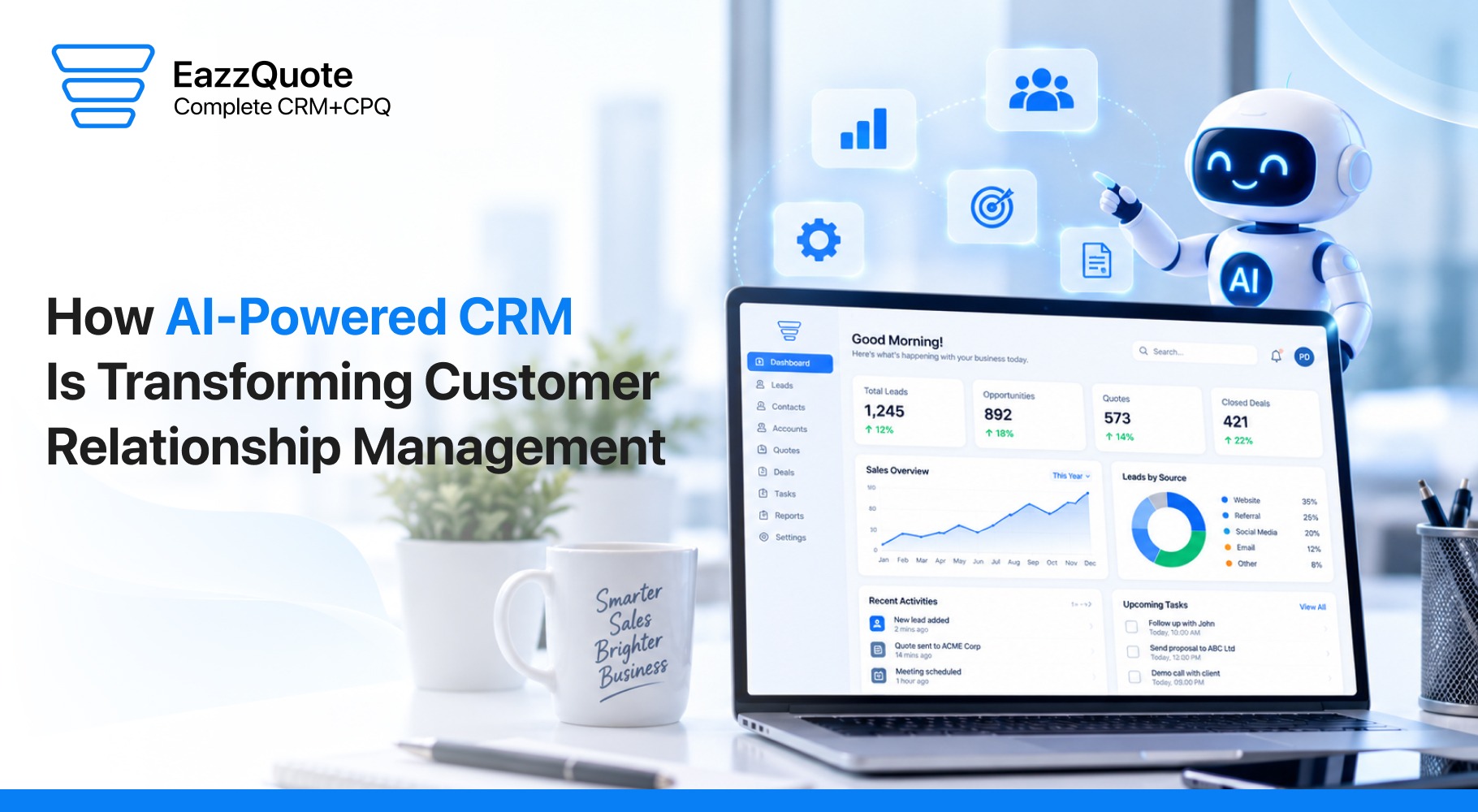
In today's competitive business environment, managing customer relationships is no longer limited to storing contact information, tracking sales, and maintaining customer records. Businesses need faster responses, better insights, personalized communication, and smarter decision-making. This is where AI-powered CRM is transforming the future of customer relationship management.
Artificial Intelligence has become one of the most important technologies in modern business software. When integrated with a CRM system, AI can analyze customer data, identify patterns, predict future opportunities, automate repetitive tasks, and provide intelligent recommendations to sales and customer service teams.
A traditional CRM system helps businesses organize information. An AI CRM, however, helps businesses understand that information and take smarter actions.
What Is an AI-Powered CRM?
An AI-powered CRM is a customer relationship management platform that uses artificial intelligence in CRM to improve sales, marketing, customer support, and business operations.
AI technologies such as machine learning, natural language processing, predictive analytics, and automation can help CRM systems perform tasks that previously required significant manual effort.
For example, an intelligent CRM can:
- Identify high-quality leads.
- Predict the probability of closing a deal.
- Suggest the best time to contact a customer.
- Generate personalized email content.
- Automate follow-up activities.
- Analyze customer behavior.
- Provide sales forecasts.
- Answer customer queries through AI assistants.
This makes the CRM platform more proactive rather than simply acting as a database.
Intelligent Lead Management with AI
One of the biggest advantages of AI-powered CRM is intelligent lead management. Businesses often receive leads from websites, social media platforms, advertisements, referrals, and other marketing channels. Managing every lead manually can become difficult as the business grows.
AI can analyze lead information and automatically identify which prospects are more likely to become customers.
For example, AI can consider factors such as:
- Customer industry
- Location
- Website activity
- Previous interactions
- Email engagement
- Product interest
- Budget indicators
- Communication history
Based on this information, the CRM can assign a lead score. Sales teams can then focus on high-potential opportunities instead of spending equal time on every lead.
This improves productivity and helps businesses achieve better conversion rates.
AI Sales Automation Saves Time
Sales professionals often spend a large portion of their time on administrative activities. Updating customer information, creating follow-up tasks, sending emails, scheduling meetings, and preparing reports can take valuable time away from actual selling.
AI sales automation can reduce this workload.
An AI-enabled CRM can automatically create reminders, update customer records, suggest follow-up actions, and generate communication drafts. Sales representatives can spend more time building relationships with customers while the system handles repetitive activities.
Automation can also ensure that important opportunities are not forgotten. For example, if a customer has not received a follow-up for several days, the CRM can automatically notify the responsible sales representative.
This creates a more organized and efficient sales process.
Personalized Customer Experiences
Customers today expect businesses to understand their requirements. Generic communication is becoming less effective, especially when customers receive hundreds of promotional messages every day.
Artificial intelligence in CRM helps businesses deliver more personalized experiences.
AI can analyze previous purchases, customer preferences, website interactions, support conversations, and communication history. Based on these insights, businesses can create more relevant messages and recommendations.
For example, an AI CRM can help a sales representative understand:
- Which products the customer may be interested in.
- What communication the customer previously received.
- Which challenges the customer is facing.
- When the customer is most likely to respond.
This enables businesses to provide the right message at the right time.
Better Sales Forecasting
Sales forecasting is essential for business planning. However, traditional forecasting often depends heavily on assumptions and manually prepared reports.
An AI-powered CRM can improve sales forecasting by analyzing historical sales data, current opportunities, customer behavior, and sales trends.
AI can identify patterns that may not be immediately visible to human users. It can estimate which opportunities are likely to close and identify potential risks in the sales pipeline.
For example, if a deal has remained inactive for an extended period, AI can identify it as a potential risk. Similarly, if a prospect has shown strong engagement through multiple interactions, the system may identify the opportunity as having a higher probability of conversion.
These insights help managers make better decisions.
AI Chatbots and Customer Support
Customer support is another area where AI integration provides significant benefits. AI chatbots can answer common customer questions, provide product information, and guide users through basic processes.
When connected with a CRM platform, the chatbot can access relevant customer information and provide more personalized support.
For example, instead of asking customers to repeat their details every time they contact the business, the system can recognize their previous interactions and provide contextual assistance.
AI can also help support teams prioritize customer requests. Urgent issues can be identified and assigned to the appropriate team members more quickly.
Data-Driven Customer Insights
Modern businesses generate large amounts of customer data. However, collecting data is not enough. Businesses must understand and use the information effectively.
Customer insights generated by AI can help organizations identify trends, opportunities, and potential problems.
AI can analyze data from multiple sources and provide useful information such as:
- Customer engagement trends
- Most successful marketing channels
- Common customer concerns
- Sales performance
- Lead conversion patterns
- Customer retention opportunities
These insights can support better strategic decisions across the organization.
Improving CRM Data Quality
One of the common challenges in traditional CRM systems is poor data quality. Duplicate contacts, missing information, outdated records, and inconsistent entries can affect business operations.
AI can help identify duplicate records, suggest missing information, and detect unusual or inaccurate data.
Improved data quality ensures that sales and marketing teams have access to reliable customer information.
The Future of AI CRM
The future of AI CRM is expected to become even more intelligent and automated. AI assistants will increasingly help employees manage customer interactions, generate reports, analyze business performance, and recommend the next best action.
Voice technology may also become more common in CRM platforms. Users may be able to update records, search customer information, and create tasks through voice commands.
Predictive and generative AI will continue to make CRM platforms more proactive. Instead of simply showing information, the CRM will increasingly recommend what the business should do next.
Conclusion
The integration of artificial intelligence in CRM is changing the way businesses manage customer relationships. From intelligent lead management and AI sales automation to personalized communication and advanced sales forecasting, AI helps businesses work more efficiently and make smarter decisions.
Companies that adopt AI-powered CRM solutions can improve productivity, understand customers better, and create stronger sales processes.
The future of customer relationship management is not just about managing data. It is about using intelligence to turn customer information into meaningful business opportunities.
Turn Every Sales Opportunity into a Winning Quote — Get Started with EazzQuote.
Get StartedTags
FAQ Ai CRM With Sales
An AI CRM uses artificial intelligence to automate sales, customer management, and decision-making.
It supports AI sales automation, lead prioritization, follow-ups, and sales insights.
It uses AI to identify, score, and prioritize leads based on their potential.
Yes. CRM automation can handle follow-ups, data entry, reminders, and customer interactions.
AI analyzes customer data to provide personalized interactions and actionable customer insights.
Yes. AI analyzes historical and current sales data to generate more informed sales forecasting.
Smart CRM software combines traditional CRM features with AI-driven automation, analytics, and recommendations.
Artificial intelligence in CRM helps businesses save time, improve productivity, understand customers, and increase sales efficiency.
Contact
Email: info@eazzquote.com
Contact Us: +91-9124985345 | +971-561292026